
Bingo odds calculation explained properly starts with the numbers, but the interface determines whether players can actually test them. At Australian-facing rooms, adults should be able to trace card combinations, ball counts and prize conditions without guessing. Hobart players deserve the same clarity as metro patrons: AUD balances, familiar filters and visible rules. The practical question is not which room looks flashiest, but whether its maths and navigation make informed decisions straightforward.
Start with what the bingo screen actually tells you

A useful bingo odds calculation begins with three published values: the total number of balls drawn, the number of spaces on each card and the winning line pattern. If 45 balls are drawn across a five-by-five card, the theoretical line probability is 5 × [5 × 4 × 3 × 2 × 1] ÷ [45 × 44 × 43 × 42 × 41]. That describes one five-number line, not the final prize. Four corners, full house and cover patterns each need separate treatment, as do linked lines sharing a square.
Australian-facing interfaces should place these inputs beside the calculation, not bury them in a help article. Look for an “Odds” or “Rules” control that opens a clear panel, explains whether free and centre squares are counted, and states whether several cards or quick-play options alter the odds. A compact example matters more than a wall of mathematics: five drawn numbers can be arranged in four lines for corners, while five selected lines on one card may not be independent.
This is where I take a supplier-trust view shaped by managing casino product decisions at Aruze Gaming Australia: transparency is a product feature, not decorative copy. If the screen shows “50% chance” but fails to define the event, it is not player-friendly localisation. Nor should AUD prize values be translated while the underlying probabilities remain hidden.
Judge the maths by the questions it answers
Can the player reproduce the calculation?
Start with the simplest test. Does the room identify its ball count, card layout, line requirement and prize rules before the first round? Check whether the same terminology appears on the lobby card, game instructions and result screen. “Match five” could mean a line, five corners or five independently marked numbers; tiny wording differences can change what is being calculated.
For a five-number event on a 45-ball card, the displayed formula should be internally consistent. Multiply combinations rather than dividing blindly, account for any free square and avoid treating five numbers as an order. If a room offers 90-ball bingo, the calculation changes again, and an Australian interface should not present 45-ball odds as a universal house rule.
Search is helpful when filters work as intended. A player should be able to search “four corners”, filter to AUD-funded games and then reach each game’s rule panel in one or two actions. Filters that hide odds information are not convenience. Players should also be able to enlarge rules, return to the previous result and understand why a game disappeared after a new balance update.

Does localisation survive beyond currency?
Currency localisation is easy to spot. Australian players should see AUD, Australian-formatted amounts and a clear minimum stake before joining. Beyond that, language matters: concise labels, readable equations and explanations written for ordinary players rather than mathematicians.
Hobart’s varying connection speed makes that test practical. Test the lobby on mobile data, pause while loading the rules and reopen a game after changing orientation. Controls should remain reachable, numbers should not truncate and the odds panel should preserve the selected game. A page that merely loads on desktop is not fully localised.
At 18+, age confirmation should happen before account registration, while identity checks and payment controls remain part of normal verification. Support should be available in Australian English and reachable from a stuck calculation panel. Never treat a visible support badge as proof of regulatory approval; players must confirm the operator’s status and applicable terms independently.
What should players weigh before depositing?
The first consideration is mathematical completeness. A credible room distinguishes a single-line probability from the probability of any prize, and explains whether multiple lines or cards create overlapping outcomes. Published percentages should state whether they are theoretical, per round or based on another defined event.
Second, inspect the calculation path. Clear inputs, visible assumptions and a worked example let a player reproduce the result. Obscure notation, unexplained free squares and inconsistent labels weaken confidence, even when the lobby looks polished. This comparison reflects the same supplier judgement I would apply to Aruze Gaming Australia projects: the product should make the rules understandable before asking for money.
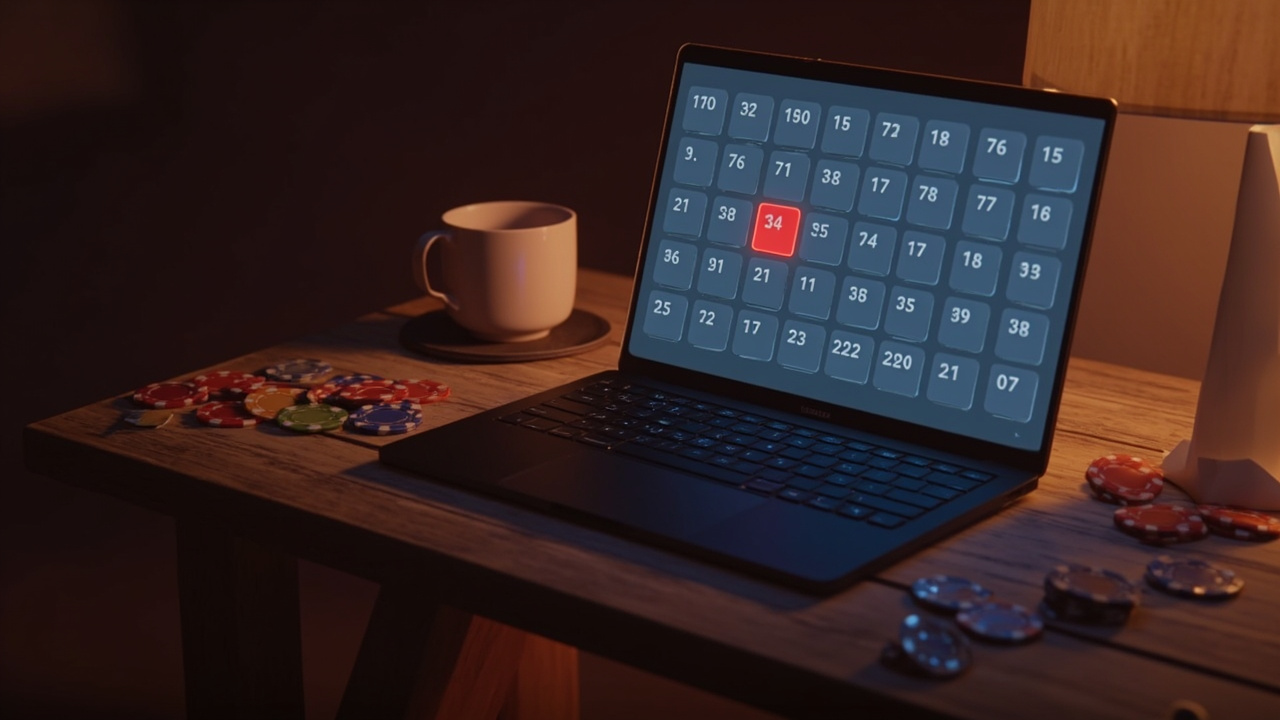
Third, consider the player’s actual pattern. Someone aiming for four corners needs different figures from someone paying for twelve lines. Multi-card play may improve convenience without improving the theoretical chance of completing a specified line on a fixed set of balls. Bonus mechanics should be separated from the base calculation: free cards, guaranteed-progress promotions and loyalty rewards can affect value, but they should not masquerade as better base odds.
Payment choices also belong in the decision. AUD methods, visible fees, withdrawal conditions and session time-outs should be explained before confirmation. A brand offering “instant” convenience with unclear verification timing has not fully answered the usability question.
My practical verdict for Australian bingo players
For adults 18+, the best bingo odds calculation explained through the product is one players can inspect and reproduce. Prioritise transparent rules, clear AUD presentation, responsive navigation and honest distinctions between probabilities. Before depositing, compare figures, locate the relevant uptown aces no deposit bonus online terms separately, and confirm any operator’s legal status rather than assuming it from branding.
A quick bonus comparison can help, but the in-game maths remains decisive. Check eligibility, wagering and payment conditions without assuming offshore access is licensed in Australia. By arvo, the room should still make the selected game, AUD stake and odds definitions easy to find. No worries if it does not; clarity is the feature that earns trust.

Comments are closed.